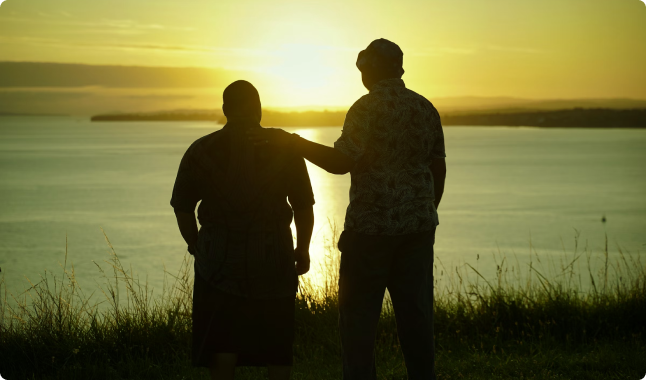
From the rugby field to rural life, wellbeing is built through connection
For former All Black captain Sam Whitelock, belonging is not one big thing. It’s built through the small acts of care that make a place feel like home, and people feel seen.

After years of professional rugby, time overseas and life on the farm, Sam and his whānau have returned to the Manawatu family dairy farm where he grew up. The move has brought him back to familiar land, childhood memories and long-standing community ties.
Knowing your roots and having a deep connection to the land is a common feeling for many people living rurally. It’s a strong protective factor for wellbeing, but even more important is connection with others.
“The belonging to the land is really, really strong in the rural community. Sometimes it’s a little bit hard to connect because everyone’s busy. But when you do get that opportunity to get off farm, and make it into a habit, it’s really nice to connect with similar people.” - Sam Whitelock
That connection can be as simple as neighbours arriving with a meal to welcome a family into the district. Sam remembers that gesture when his family recently moved, not because they needed food, but because it sent a clear message: you belong here.
Rebuilding belonging through change
Sam’s life has involved many transitions: from professional rugby to farming, from Aotearoa to overseas and back again, and from one rural community to another. Each move has meant rebuilding routines and friendships.
New places can feel uncertain at first, but Sam says children often show adults how quickly connection can happen.
“Kids are so resilient - they make friends so quickly,” he says. “It’s harder when you’re an adult, and it takes a concerted effort to make connections in a new place which can be hard for some people, that’s why it’s great when other members of the community welcome newcomers in.”
Shared activity makes connection easier
Sport has been one of the strongest places where Sam has experienced belonging. In rugby, teammates quickly formed bonds through shared goals, familiar routines and the need to rely on one another. That same sense of connection can happen in everyday community activities too.
For Sam, committing to a social netball team has become one way to step away from farm jobs, stay active and connect with people outside the immediate farming world. The accountability of being part of a team helps make connection a priority.
“When you’ve committed to a team, you realise that if you don’t show up, there won’t be enough to play,” he says. That small commitment becomes a reason to show up - for yourself and for others.
Small acts can make a big difference
Sam doesn’t think of belonging as something formal or complicated.
“Sometimes it’s a text or a call. Sometimes it’s just calling in unannounced if you’re in the area. It’s more just saying, look, I’ve been thinking about you.” - Sam Whitelock
Those moments may seem small, but they can help someone feel noticed and supported. They remind us that we do not need the perfect words to strengthen connection - we just need to reach out.
Belonging matters for wellbeing
Belonging is closely linked to mental wellbeing. When people feel connected to whānau, friends, neighbours, teammates, workplaces, schools and communities, they are more likely to feel supported through life’s ups and downs.
Sam’s reflections show that belonging is not always about grand gestures. It can be built in regular, repeatable moments that help people feel welcome: making time for a kōrero, inviting someone along, lending a hand, remembering a birthday or significant date, or checking in when life feels hard.
“I never ring someone and be like, right, I’m going to increase their belonging,” he says. But those everyday connections matter. “Those little things, that little connection, increases that belonging.”
Sam Whitelock is the ambassador for Farmstrong, an initiative co-created by the Mental Health Foundation and FMG to help farmers, growers and their families cope with the ups and downs of farming by sharing things they can do to look after themselves and the people in their business.


Every dollar helps build a kinder, more inclusive Aotearoa
Your support makes a real difference